


CASE BRIEF
Ruling on the Application for Bail Pending Trial
Prepared by MKA Law LLP, Advocates for the Victims (the Family of the Deceased)
Case Republic v Klinzy Baraza Masinde
Reference High Court Criminal Case No. E010 of 2025
Court High Court of Kenya at Milimani, Criminal Division
Coram Hon. Lady Justice M. Muigai
Ruling delivered 9 February 2026
Charge Murder, contrary to section 203 as read with section 204, Penal Code (Cap. 63)
Outcome Application for bail/bond DENIED
1. Summary of the Decision
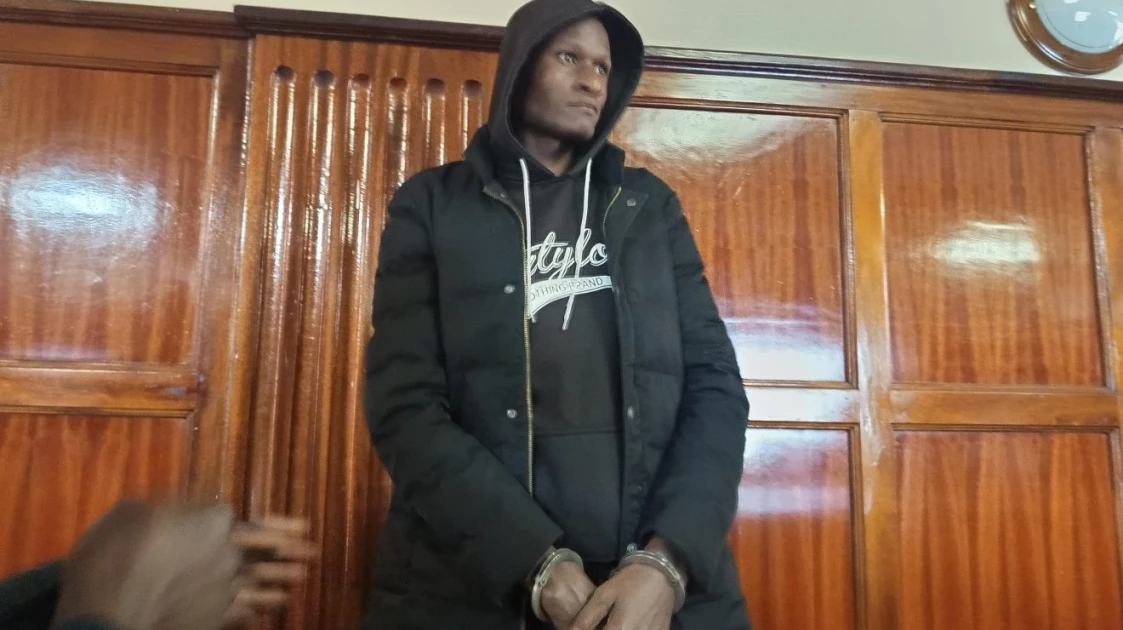
The Accused, a serving police officer, is charged with the murder of Boniface Kariuki Mwangi, who was shot at close range outside Imenti House in the Nairobi Central Business District on 17 June 2025 during public demonstrations. He applied to be released on bail pending trial, relying on the constitutional presumption of innocence and the right to liberty under Articles 49(1)(h) and 50(2) of the Constitution. We represent the deceased's family and led the opposition to that application, alongside the Office of the Director of Public Prosecutions (ODPP) and the Independent Policing Oversight Authority (IPOA).
On 9 February 2026, the Court denied bail. It found that the prosecution and the victims had demonstrated compelling reasons within the meaning of Article 49(1)(h): a real risk of witness interference, the need to protect vulnerable witnesses and the victims, and the preservation of public order, peace and security. The denial was expressed to be “for now,” with the trial to be expedited and vulnerable witnesses to testify first, leaving the question of bail open to reconsideration once those witnesses have been heard.
2. The Issue Before the Court
The sole question was whether the Accused should be released on bail or bond pending trial, or whether the prosecution and the victims had established compelling reasons, on a balance of probabilities, to justify limiting that constitutional right under Article 49(1)(h).
3. Our Submissions and Strategy
Our submissions dated 13 October 2025 opened with a deliberate concession that became the spine of the strategy: that the gravity of a murder charge on its own does not justify denial of bail. By conceding the weakest version of the State’s case, we removed the easy target the defence expected to attack and refocused the Court on concrete, provable circumstances unique to this Accused. We then advanced four reinforcing pillars.
(a) Seriousness of the charge and the instinct of self-preservation
We invited the Court to look past the label of the offence to its psychological pull. Drawing on Republic v David Ochieng Ajwang alias Daudi & 11 Others (2013) and Republic v Ahmed Mohammed Omar & 6 Others (2010), which adopted the Malawian authority of John Zenus Ungapake Tembo, we argued that the prospect of a capital sentence is precisely what drives an accused either to take flight or to ensure that critical evidence is suppressed. The cold, execution-style manner of the killing made that instinct more acute, not less.
(b) Strength of the prosecution case
We relied on the affidavit of IPOA, an independent statutory oversight body, which had certified that there was overwhelming proof that the Accused committed the offence and that there were no other suspects or persons of interest. Anchoring the strength of the case in an independent body’s findings, rather than the prosecution’s own assertions, lent it weight while keeping us clear of the presumption of innocence, the “potential landmine” flagged by Ngugi J in Republic v Joseph Thiong’o Waweru & 17 Others (2017).
(c) Witness interference and the “blue code of silence”
This was the decisive pillar. We submitted that, as a member of the disciplined forces, the Accused retained training, residual authority and access to police networks that could be used, directly or by proxy, to trace, intimidate or influence witnesses, several of whom are junior officers and frightened civilians. Our strongest authority was Republic v Samson Kiprotich Taalam & 5 Others (2025), a recent decision of Khavedza J denying bail to police officers on materially identical facts, holding that residual authority and access to service networks made the apprehension of interference “not speculative but real.” Eric Muriuki participated in arguing against the grant of bail to the 6 accused persons in Republic v Samson Kiprotich Taalam, submitting extensively on the Blue Code of Silence.
(d) Public interest and confidence in the administration of justice
Finally, we argued that the right to bail is not absolute and may yield to public order. We deployed Guideline 4.9(K) of the Bail and Bond Policy Guidelines, which permits pre-trial detention to preserve public order, together with Article 24 of the Constitution and Taalam (para 59), to frame the killing of Boniface Kariuki, carried out in public view during demonstrations and met with national outrage, as a matter where the collective interest of society outweighed the Applicant’s individual right to release.
(e) Asserting the victims’ distinct voice
Beyond aligning with the State, we leveraged the family’s statutory standing under sections 9(2) and 10 of the Victims Protection Act to put before the Court matters only the victims could speak to: that the family had been bombarded with calls and messages castigating them and feared for their safety. This gave the Court a victim-centred, evidentially grounded basis for caution that the prosecution alone could not supply.
4. The Court’s Reasoning
The Court accepted the settled framework: bail is a constitutional right, the burden lies on the prosecution to show compelling reasons on a balance of probabilities, and bare allegations will not suffice. Crucially, when it came to disposing of the application, the Court organized its analysis around three issues that mirrored our submissions: public order, peace and security; the likelihood of interference with witnesses; and the protection and safety of the victims and their family.
In doing so the Court adopted the very authorities and instruments we introduced, including Taalam, Guideline 4.9(K) of the Bail and Bond Policy Guidelines, and the victims’ rights under sections 9 and 10 of the Victims Protection Act. It found the Accused’s training and continued access to police systems created a real likelihood of interference, that the witnesses included frightened colleagues and civilians (with the ODPP having written to the Witness Protection Agency for two of them), and that the public character of the killing engaged public order considerations that could not be ignored.
5. Holding and Disposition
Bail was denied. The Court held that compelling reasons had been demonstrated in relation to the likelihood of witness interference, the protection of the victims, and the maintenance of public order, peace and security. It directed, however, that: (i) the denial stands “for now” and does not limit the number of times bail may be sought, following Republic v Ahmad Abolafathi Mohammad (2013); (ii) the trial be expedited; and (iii) the vulnerable witnesses testify first, after which bail may be reconsidered.
6. Strategic Takeaways
The application was won not by resisting the presumption of innocence but by reframing the contest around specific, evidenced risks tied to the Accused’s unique status as a police officer. Three choices proved decisive: conceding that the charge alone could not defeat bail, which built credibility; anchoring the strongest pillar (witness interference) in a recent, factually identical authority in Taalam; and giving the victims a distinct, statutorily grounded voice rather than merely echoing the State. The principal residual risk is that the denial is provisional: Once the priority witnesses have testified, the Accused may renew the application, and our continued opposition should be prepared to meet a record in which the interference risk may have diminished.
At MKA Law LLP, we pride ourselves on streamlining legal transactions and engagements for our clients so they can be at peace and focus on their core business agenda. We are proactive, competent, and continually finding innovative ways to solve problems for our clients. Consult us today through hello@mkalawllp.com or muriuki@mkalawllp.com.